Understanding Nutrition Labels
Posted on February 1, 2026
What is a Nutrition Facts Panel?
The nutrition facts panel is a standardized table of information found on packaged food products. It displays the nutritional content per serving of the product, including calories, macronutrients, micronutrients, and other important dietary information.
Serving Size
The serving size is listed at the top of the nutrition facts panel. It represents the amount of food for which the nutritional values are calculated. Understanding serving sizes is important because the values on the label refer to this specific amount, not necessarily the entire package.
Calories
Calories represent the energy provided by one serving of the product. This value is calculated based on the macronutrient content and is useful for understanding the energy content of what you are consuming.
Macronutrients
Macronutrients include total fat, saturated fat, trans fat, cholesterol, sodium, total carbohydrates, dietary fiber, sugars, and protein. Each macronutrient serves different functions in the body and is present in different amounts in various foods.
Total fat includes all types of fat in the product. Saturated fat is a type of fat with specific chemical properties. Trans fat is an industrial fat that has been restricted in many countries. Cholesterol is a waxy substance produced by animals and found in animal products.
Sodium contributes to blood pressure and is recommended in limited amounts. Carbohydrates include fiber and sugars. Dietary fiber is plant material that provides structure and contributes to digestive health. Sugars include both naturally occurring and added sugars. Protein is essential for building and repairing body tissues.
Micronutrients
Micronutrients include vitamins and minerals present in smaller quantities but essential for various body functions. Common micronutrients listed on labels include vitamin D, calcium, iron, and potassium.
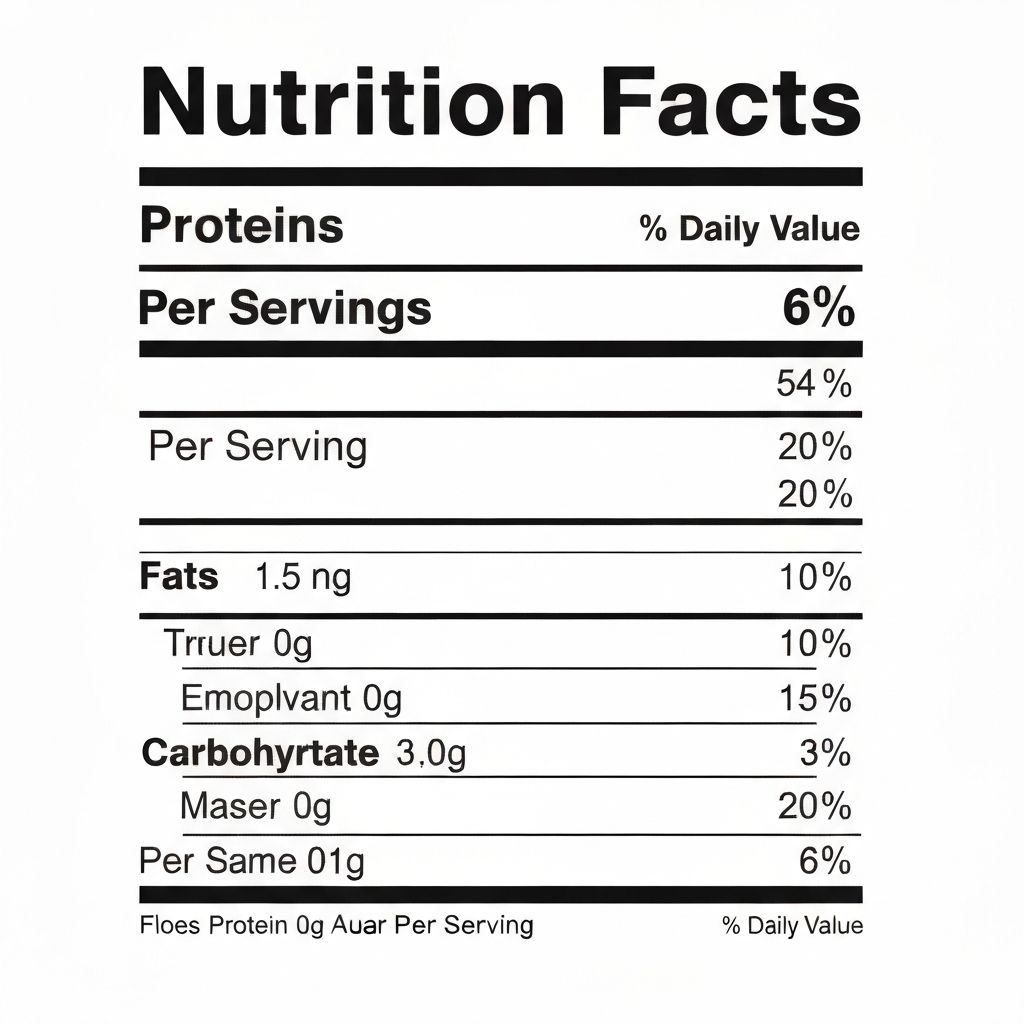
Daily Value Percentages
The daily value percentage indicates how much of the recommended daily intake of a nutrient one serving provides. It is based on a 2000-calorie diet, but individual requirements may differ based on age, sex, activity level, and other factors.
Understanding Percentages
A daily value of 5% or less is considered low in that nutrient. A daily value of 20% or more is considered high in that nutrient. These percentages help consumers compare nutrients across different products.
Label Reading Tips
When reading nutrition labels, start with the serving size to ensure you are interpreting the values correctly. Compare the serving size to the amount you actually consume. If you eat double the serving size, double the nutritional values listed.
Use the daily value percentages to identify nutrients you want to consume in adequate amounts, such as fiber, vitamins, and minerals, and nutrients you want to limit, such as sodium and added sugars.
Remember that nutrition labels provide objective information about the product's nutritional content. They do not make recommendations about what you should eat.
Educational Information
This article is for educational purposes and explains how to interpret nutrition labels. Individual dietary needs vary. Food labeling regulations and formats differ by country and region. This information does not constitute personal nutritional advice.